This article will be presented in three parts. In this series, I reflect on how art helps preserve memory and shape a nation’s identity. It revisits the richness of Nigeria’s ancient artistic traditions from the remarkable works of Benin, Ife, and Igbo-Ukwu to the modern achievements of artists such as Ben Enwonwu. It also recalls personal encounters and friendships with cultural figures whose lives were deeply connected to Nigeria’s artistic and intellectual heritage, including Ekpo Eyo and Wole Soyinka. Through these reflections, the article seeks to remind us that art is more than beauty on display; it carries the memory of a people and helps define who we are as a nation.
There are certain stories in the life of a nation that must never be allowed to fade quietly into the background. They are stories that remind a people of who they are, where they come from, and what they are capable of achieving. One such story belongs to Nigeria, and at the centre of it stands a remarkable artist “Ben Enwonwu”. His life and work represent not only personal brilliance but also the continuation of a long and sophisticated artistic tradition that stretches back centuries across the Nigerian landscape.
More than half a century ago, in a world where the United Kingdom and the Commonwealth were filled with distinguished painters and sculptors, a Nigerian artist was chosen for an honor that few could have imagined at the time. Ben Enwonwu was commissioned by Buckingham Palace to produce a portrait of Her Majesty Queen Elizabeth II. The commission required several sittings with the monarch herself moments that placed a Nigerian artist face to face with the British Queen inside the historic walls of the royal palace. From those sessions emerged one of the most memorable modern portraits of Queen Elizabeth II. The work, dignified and masterfully executed, found its place within the historic royal collection, among the treasured works preserved in the homes of Britain’s kings and queens. It remains a powerful symbol of artistic excellence and cultural intersection. Yet for many Nigerians today, the significance of that moment is rarely discussed. It is a piece of history that deserves far greater recognition than it often receives.
Around that same period in history, I found myself in London as a young student. Like many students arriving from different parts of the Commonwealth, we were introduced to the city through a series of orientation activities organized by the British Council. One of their strongest recommendations was that we visit the British Museum, an institution widely regarded as one of the world’s most important repositories of human history and civilization. I remember walking through its vast halls with curiosity, but without any clear expectation of what I might discover. What I encountered there, however, was nothing short of astonishing.
In one section of the museum, dedicated to African art and heritage, I came face to face with a collection that would leave a lasting impression on me. Displayed in glass cases were remarkable works from Nigeria, objects whose craftsmanship, complexity, and historical depth were almost unimaginable.
The famous Benin Bronzes stood prominently among them. These were intricate plaques and sculptures made primarily of brass and bronze, produced by artists of the ancient Kingdom of Benin as far back as the thirteenth century. For centuries these works adorned the royal palace in Benin City, documenting the lives of kings, warriors, and court officials. They served as visual records of history, symbols of power, and expressions of spiritual belief. The level of technical skill involved in their creation is extraordinary. Using the lost-wax casting method, Benin craftsmen were able to produce detailed images with astonishing precision. Historians and art scholars around the world have long acknowledged that these works rank among the greatest achievements in metal sculpture anywhere in the world.
Yet the story of the Benin Bronzes is also closely linked with a painful chapter of colonial history. In 1897, British forces invaded and destroyed the royal palace in Benin City during what became known as the Benin Expedition. Thousands of artworks were looted and later dispersed across museums and private collections throughout Europe and North America. Today many of these pieces remain in institutions such as the British Museum, although recent years have seen growing international efforts to return some of them to Nigeria.
As impressive as the Benin works were, they were not the only treasures that captured my attention that day. Nearby were the extraordinary bronze and terracotta heads from the ancient Yoruba city of Ife. These sculptures, created between the twelfth and fifteenth centuries, possess a naturalism that is almost breathtaking. The calm expressions, the balanced proportions, and the delicate detailing of facial features reveal a level of artistic sophistication that rivals the classical traditions of ancient Greece and Rome.
For many early European scholars who first encountered them, the realism of the Ife heads was so remarkable that they initially doubted they could have been produced in Africa. But history has since confirmed what Africans themselves always knew that the civilizations of West Africa possessed advanced artistic and technological knowledge long before colonial contact.
Equally fascinating were the artifacts from Igbo-Ukwu in present-day Anambra State. These objects, discovered in the twentieth century, date back to around the ninth century AD. The bronzes from Igbo-Ukwu are famous for their intricate decorative patterns; spirals, knots, and delicate surface designs that demonstrate astonishing metallurgical expertise.
What makes these works particularly significant is that they represent one of the earliest known bronze casting traditions in sub-Saharan Africa. Their complexity suggests the existence of a highly organized society with skilled craftsmen and a deep understanding of metalworking technology centuries before similar techniques appeared in many other parts of the world. Standing there in the British Museum, absorbing the depth of this history, I experienced a mixture of emotions that is difficult to describe. On the one hand, I felt immense pride. The creativity and intelligence of our ancestors were clearly visible in those works. They spoke of a civilization rich in knowledge, imagination, and cultural confidence.
And that was the beginning of my deep and abiding interest in the art of Nigeria; art that had already been judged by scholars and collectors around the world as among the finest anywhere. What began as curiosity inside a museum in London slowly became a lifelong engagement. By the time I returned to Nigeria in the mid-1960s, that curiosity had matured into conviction. I was no longer merely impressed by what I had seen abroad; I was determined to understand it at home. It was therefore no coincidence that many of the friendships I formed in those years were with men whose lives were connected with culture, heritage, and artistic expression. Men like Ben Enwonwu, Dr. Ekpo Eyo, Segun Olusola, and Wole Soyinka to mention but a few.
Each of them, in his own way, stood at the intersection of art and national identity.
Ben Enwonwu, whom I have already spoken about, was by then firmly established as the leading figure of modern Nigerian art. Beyond his famous royal commission and his celebrated sculpture Anyanwu, he was a cultural bridge-builder. Educated in both Nigeria and Britain, he became one of the earliest Africans to gain international recognition in the Western art establishment without surrendering his African aesthetic roots. His paintings, often portraying dancers, masquerades, and elegant female forms, fused Igbo spirituality with modernist technique. At a time when Nigeria was defining itself politically after independence in 1960, Enwonwu was helping to define it visually. He was not simply producing art; he was shaping the image of a new nation.
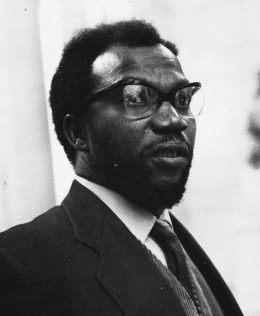
Dr. Ekpo Eyo, a man whose contribution to Nigerian art history cannot be overstated. Trained as an archaeologist, Eyo became one of the foremost authorities on Nigeria’s ancient art traditions. He played a crucial role in studying and interpreting the Nok terracottas – some of the earliest known sculptural works in sub-Saharan Africa, dating as far back as 1000 BCE. As Director-General of the National Commission for Museums and Monuments, he championed the preservation of Nigeria’s archaeological heritage at a time when looting and neglect posed serious threats. Dr. Eyo’s work helped place Nigerian antiquities within a global scholarly framework, proving through rigorous research that the artistic achievements of places like Nok, Ife, and Benin were part of a sophisticated and continuous cultural evolution. Eyo provided the historical and scientific foundation that validated our ancient genius.
To Be Continued…..